Business succession planning in India is the process of preparing for the future transfer of ownership, management responsibilities and control of a business. It is particularly important for family-owned businesses, partnerships, closely held companies and businesses that depend heavily on a founder or key promoter.
A successful business succession plan helps ensure that the business can continue operating smoothly when the owner retires, becomes unable to manage the business, or dies. It can also reduce disputes among family members, employees and other stakeholders.
Succession planning is not limited to deciding who will inherit the business. It also involves identifying the next leader, transferring knowledge, structuring ownership, preparing legal documents, managing taxes and ensuring that customers, employees and lenders continue to have confidence in the business.
What Is Business Succession Planning?
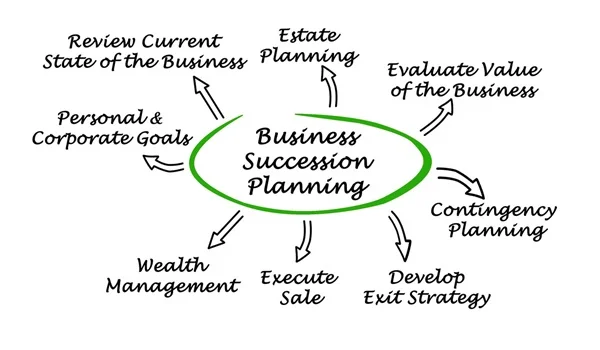
Business succession planning is a structured strategy for deciding who will own and manage a business in the future and how the transition will take place.
For example, suppose a business founder owns a manufacturing company and plans to retire in five years. One child may be interested in managing the company, while another may prefer to receive financial assets instead of participating in the business.
A succession plan can address questions such as:
- Who will manage the business after the founder?
- Who will own the business?
- How will shares or partnership interests be transferred?
- What happens if the owner dies unexpectedly?
- How will family members who do not work in the business be treated?
- Who can make important decisions during the transition?
- How will customers, employees and suppliers be informed?
- What happens if the proposed successor does not want to continue the business?
The objective is to make the transition predictable rather than leaving important decisions to be made during a crisis.
Why Is Succession Planning Important for Indian Businesses?
Many Indian businesses are family-owned or closely controlled by one or a few individuals. In such businesses, a large amount of operational knowledge may remain with the founder.
Without proper planning, the sudden death or retirement of the owner can create uncertainty over ownership, management and decision-making.
Some major benefits of succession planning include:
- Business Continuity
A documented succession plan helps the business continue operating even when the current owner is no longer available.
- Reduced Family Disputes
A clear plan can reduce disagreements about ownership, management responsibilities and distribution of assets.
- Leadership Transition
The successor can be trained before taking complete responsibility for the business.
- Protection of Business Value
A sudden leadership change can affect customers, employees and suppliers. Planned transition can help protect the goodwill and value built over many years.
- Better Financial Planning
Succession may involve transferring shares, property, partnership interests or other assets. Advance planning allows the owner to examine the financial and tax implications.
- Protection Against Unexpected Events
Succession planning is not only about retirement. It can also address death, incapacity, serious illness, disputes between partners or the sudden exit of a key promoter.
Who Needs a Business Succession Plan?
Succession planning can be useful for:
| Business Type | Why Succession Planning Matters |
| Family business | Helps manage ownership and leadership transition |
| Sole proprietorship | Provides a plan for business assets and continuity |
| Partnership firm | Clarifies what happens if a partner dies or retires |
| Private limited company | Helps structure transfer of shares and management control |
| LLP | Helps address changes in partners and ownership interests |
| Professional practice | Helps transfer clients, assets and responsibilities |
| Manufacturing business | Protects operational knowledge and customer relationships |
| Retail business | Helps maintain continuity of management and ownership |
The exact legal process depends on the structure of the business and the applicable agreements and laws.
Key Elements of Business Succession Planning
A comprehensive succession plan normally covers several areas.
- Identify the Current Ownership Structure
The first step is to understand who currently owns the business.
For a company, this could include:
- Shareholders
- Promoters
- Directors
- Key management personnel
For a partnership, the partnership deed and partners’ rights become particularly important.
For a sole proprietorship, the business and its owner are legally closely connected, so succession can require a different approach.
- Identify Potential Successors
The successor could be:
- A family member
- An existing employee
- A professional manager
- A business partner
- Another shareholder
- An external buyer
Being a family member does not automatically make someone suitable for management. The owner should consider skills, experience, interest in the business and ability to lead employees.
- Separate Ownership From Management
One important succession-planning decision is whether ownership and management should go to the same person.
For example, three children may inherit economic interests in a business, but only one may actively manage it.
The succession plan can therefore distinguish between:
Ownership: Who receives shares or economic interests?
Management: Who runs the business?
This distinction can be particularly useful in family businesses.
- Develop the Successor
A successor should ideally be prepared several years before the transition.
Training may include:
- Finance and accounting
- Operations
- Sales and marketing
- Employee management
- Customer relationships
- Supplier negotiations
- Compliance
- Strategic decision-making
The successor can gradually take responsibility instead of receiving complete control overnight.
Role of a Will in Business Succession
A Will can be an important part of an individual’s overall succession and estate planning. The Indian Succession Act, 1925 contains provisions relating to testamentary and intestate succession, although the rules applicable to a particular person can depend on the person’s circumstances and applicable personal law.
For people covered by the Hindu Succession Act, 1956, the Act contains provisions concerning intestate succession as well as testamentary succession. Section 30 deals with testamentary succession.
A Will can help communicate how a person’s assets, including relevant business interests, are intended to be dealt with after death. However, a Will should be coordinated with the company’s constitutional documents, partnership agreements and other contractual arrangements.
It is therefore advisable to have succession documents reviewed by a qualified legal professional rather than relying on a generic Will template.
Succession Planning for a Family Business
Family businesses require additional planning because family relationships and business relationships can overlap.
Consider a family-owned company where two siblings are shareholders but only one works in the business.
The succession plan may specify:
- Who will manage day-to-day operations
- How voting control will work
- How shares can be transferred
- Whether family members can sell shares to outsiders
- How non-working family members will receive economic benefits
- How disagreements will be resolved
- What happens if a family member wants to exit
A family constitution or similar governance document may also be considered, depending on the family’s circumstances.
Business Succession Planning for Partnership Firms
Partnership firms should examine their partnership deed carefully.
The agreement may contain provisions relating to:
- Retirement of a partner
- Admission of a new partner
- Death of a partner
- Valuation of the partner’s interest
- Settlement with the outgoing partner or legal heirs
- Business continuation
- Dispute resolution
Partners should not assume that family inheritance automatically means the heir becomes a business partner. Partnership rights and succession can depend on the applicable agreement and law.
Succession Planning for Private Limited Companies
For a private limited company, succession planning commonly involves shareholding and management.
The plan may cover:
- Existing shareholding
- Proposed future shareholding
- Transfer restrictions
- Board and management succession
- Shareholder agreements
- Valuation arrangements
- Funding for a buyout, where relevant
- Treatment of minority shareholders
Company-specific legal and regulatory requirements should be checked before transferring shares or changing directors.
Tax Considerations in Business Succession
Tax planning is another important part of succession planning.
The tax consequences can depend on whether the transition happens through:
- Inheritance
- Gift
- Sale of shares
- Sale of business assets
- Retirement of a partner
- Restructuring
- Merger or other corporate transaction
Do not assume that every form of transfer has the same tax treatment.
For example, a transfer during the owner’s lifetime can have different tax implications from succession following death. The business structure, nature of the asset, transaction value and applicable tax provisions can all matter.
The Income Tax Department also provides procedures for registering legal heirs and representative assessees when a taxpayer dies. A legal heir may need to undertake tax-related responsibilities on behalf of the deceased in accordance with the Income-tax Act.
Therefore, tax planning should be undertaken with a tax professional before implementing a major ownership transfer.
Important Documents for Succession Planning
Depending on the business structure, the succession plan may involve documents such as:
| Document | Purpose |
| Will | Records testamentary intentions |
| Partnership deed | Defines partners’ rights and obligations |
| Shareholders’ agreement | Can establish arrangements among shareholders |
| Articles of Association | Governs company-related matters |
| Buy-sell agreement | Can establish arrangements for ownership exits/transfers |
| Trust documents | May be relevant in certain estate-planning structures |
| Nomination records | Can support administrative processes, subject to applicable law |
| Business valuation report | Helps establish a basis for financial decisions |
| Power of attorney | May assist with specified authority during a person’s lifetime |
Not every business needs all of these documents.
Step-by-Step Business Succession Planning Process
A practical succession plan can follow these steps:
Step 1: Review the Existing Business
Document the ownership, assets, liabilities, key contracts, employees, licences and important relationships.
Step 2: Define the Succession Objective
Decide whether the goal is family succession, management succession, sale of the business or another arrangement.
Step 3: Identify Successors
Evaluate potential successors based on skills, experience, interest and responsibilities.
Step 4: Establish Ownership Arrangements
Determine how shares, partnership interests or business assets will be handled.
Step 5: Prepare Legal Documents
Update relevant Wills, agreements, company documents and other legal arrangements.
Step 6: Train the Successor
Gradually transfer operational and decision-making responsibilities.
Step 7: Communicate the Plan
Relevant family members, senior employees and professional advisers may need to understand their respective roles.
Step 8: Review the Plan Regularly
A succession plan should not be treated as a one-time document. It should be reviewed when there are major changes in ownership, family circumstances, business structure or law.
Common Mistakes in Business Succession Planning
Waiting Until Retirement
Succession planning should ideally start years before retirement.
Assuming Children Will Take Over
Family members may have different careers and interests. The plan should be based on actual willingness and ability.
Ignoring Non-Working Heirs
If some family members receive ownership but do not participate in management, their rights and expectations should be addressed clearly.
Failing to Document Agreements
Verbal family arrangements can become difficult to enforce or interpret later.
Ignoring Key Employees
A successor may inherit ownership but still lack the relationships and knowledge needed to run the business.
Not Reviewing the Plan
A plan created ten years ago may no longer reflect the current business or family situation.
Example of Business Succession Planning
Suppose Mr. Sharma owns a family manufacturing company valued at ₹20 crore.
His son works in operations, while his daughter works outside the business. Mr. Sharma wants his son to manage the company but also wants his daughter to receive fair financial value.
A succession plan could consider:
- Son taking a management role
- Shares being structured according to the family’s agreed plan
- Daughter receiving appropriate financial assets or ownership interest
- A documented mechanism for future share transfers
- Mr. Sharma gradually reducing his operational involvement
- A valuation process for determining the value of business interests
- Updated estate-planning documents
The exact structure would depend on the company’s legal form, family circumstances, tax considerations and professional advice.
Business Succession Planning Checklist
Before finalising a succession plan, consider the following:
- Identify current owners
- Document business assets and liabilities
- Identify potential successors
- Decide who will manage the business
- Decide how ownership will be transferred
- Review partnership or company documents
- Prepare or update estate-planning documents
- Review tax implications
- Establish a business valuation method
- Plan for unexpected death or incapacity
- Train the next generation of management
- Address family-member expectations
- Communicate the transition plan appropriately
- Review the plan periodically
Frequently Asked Questions
What is business succession planning?
Business succession planning is the process of preparing for the future transfer of business ownership, management and control when the current owner retires, dies, becomes unavailable or exits the business.
Is succession planning only for family businesses?
No. It is useful for family businesses, partnerships, private companies, professional practices and other closely held businesses.
Does a Will automatically transfer a business?
Not necessarily. The effect of a Will depends on the nature of the business interest, applicable succession law and the company’s or partnership’s governing documents. These should be coordinated as part of a broader succession plan.
When should a business start succession planning?
Ideally, succession planning should begin several years before the expected transition. Early planning gives potential successors time to develop the required skills.
Can ownership and management go to different people?
Yes. A succession plan can distinguish between economic ownership and day-to-day management, subject to the business structure and applicable legal arrangements.
What happens if a business owner dies without a succession plan?
The business may face uncertainty over ownership, management and decision-making. Applicable succession laws, legal documents and the structure of the business will determine what happens next. The Income Tax Department also has specific procedures for legal heirs and representative assessees after a taxpayer’s death.
Conclusion
Business succession planning in India is an important part of long-term business management and family wealth planning. It goes beyond deciding who will inherit a business. A well-designed plan considers ownership, leadership, legal documentation, taxation, family expectations, employee continuity and unexpected events.
Business owners should start the process early, identify potential successors, document important arrangements and review the plan regularly. Because succession can involve company law, partnership law, succession law and taxation, professional advice from a lawyer, chartered accountant and other relevant advisers can be valuable before implementing the final structure.
The objective is simple: make the transition of the business as orderly, transparent and financially practical as possible while protecting the interests of the business and its stakeholders.