Choosing the right car insurance can be confusing, especially when comparing comprehensive car insurance vs third-party car insurance. Both provide important protection, but they cover different risks.
In India, third-party motor insurance is mandatory for vehicles used on public roads. Comprehensive insurance goes beyond this mandatory liability protection by also covering eligible damage to the insured vehicle, subject to the policy terms. IRDAI describes liability-only insurance as protection against specified third-party liabilities, while package/comprehensive insurance combines third-party liability with own-damage protection.
The basic difference is:
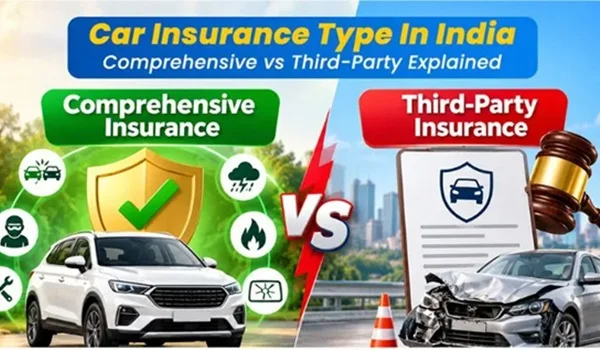
Third-party insurance = protection against covered liability to others
Comprehensive insurance = third-party liability + own-damage protection
Understanding this distinction can help car owners compare policies based on their vehicle, financial exposure and insurance requirements.
What Is Third-Party Car Insurance?
Third-party car insurance is also known as liability-only or Act Only insurance.
It is designed to cover the insured person’s legal liability arising from an accident involving the insured vehicle.
Depending on the applicable legal and policy framework, third-party insurance can cover:
- Death of a third party
- Bodily injury to a third party
- Damage to third-party property, subject to applicable limits and terms
Third-party liability insurance is mandatory for vehicles being used on public roads in India.
Example
Suppose you accidentally hit another person’s car.
The accident causes damage to the other vehicle and creates a covered third-party liability.
Your third-party policy is designed to address the applicable liability.
However, if your own car is also damaged, third-party insurance does not normally pay for repairs to your vehicle.
What Is Comprehensive Car Insurance?
Comprehensive car insurance, commonly called a package policy, combines third-party liability coverage with protection against specified damage to the insured vehicle.
Depending on the policy, own-damage protection can include losses resulting from events such as:
- Road accidents
- Theft
- Fire
- Flood
- Storm
- Earthquake
- Other specified natural events
- Certain man-made events
The exact coverage depends on the policy wording, exclusions and conditions.
For example, if your car is damaged in an accident, a comprehensive policy may cover the admissible repair cost after applicable deductibles and other deductions.
Comprehensive vs Third-Party Car Insurance: Key Differences
| Feature | Third-Party Car Insurance | Comprehensive Car Insurance |
| Third-party liability | Yes | Yes |
| Own-car damage | No | Generally covered |
| Theft of own car | No | Generally covered |
| Fire damage to own car | No | Generally covered |
| Natural-event damage | No | Generally covered |
| Accident damage to own car | No | Generally covered |
| Premium | Generally lower | Generally higher |
| IDV | Not applicable to own damage | Important |
| NCB on own-damage premium | Not applicable | Applicable according to policy |
| Add-ons | Limited/product-specific | Wider range may be available |
| Mandatory component | Yes | Includes mandatory third-party component |
| Main purpose | Third-party liability protection | Third-party + own-vehicle protection |
The term “comprehensive” does not mean that every possible loss is automatically covered. Exclusions, deductibles and policy conditions continue to apply.
Third-Party vs Comprehensive: Coverage Explained
Third-Party Insurance
Third-party insurance focuses on your liability to other people.
For example, if your car causes an accident resulting in third-party injury, death or covered property damage, the liability policy can respond according to the applicable law and policy conditions.
It does not provide general insurance protection for your own car.
Comprehensive Insurance
A comprehensive/package policy adds own-damage protection.
This means the same accident could involve two components:
Third-party liability: Protection against covered liability to others.
Own damage: Protection for eligible damage to your own insured vehicle.
This broader structure is why comprehensive insurance generally costs more.
Example: Accident Damage
Suppose your car is involved in an accident.
The losses are:
- Damage to another vehicle: ₹1.5 lakh
- Damage to your vehicle: ₹2 lakh
If You Have Third-Party Insurance
The policy can address the applicable third-party liability.
The ₹2 lakh damage to your own vehicle is generally not covered.
If You Have Comprehensive Insurance
The policy can potentially cover:
- Applicable third-party liability, and
- Eligible damage to your own car
The own-damage claim remains subject to deductibles, exclusions, depreciation and other applicable conditions.
Example: Theft
Suppose your car is stolen.
Third-Party Policy
Third-party insurance does not cover the theft of your own vehicle.
Comprehensive Policy
A comprehensive/package policy generally includes own-vehicle theft protection, subject to the policy terms.
For an admissible theft claim, the settlement is generally linked to the vehicle’s applicable Insured Declared Value (IDV) and other policy conditions.
What Is IDV in Comprehensive Car Insurance?
IDV stands for Insured Declared Value.
It represents the insured value of the vehicle for own-damage insurance purposes.
IDV is particularly important for:
- Theft claims
- Total-loss claims
- Constructive total-loss claims
IRDAI explains that the sum insured for the vehicle under own-damage cover is called the Insured Declared Value and should reflect the vehicle’s current market value.
Example
Suppose your car has an applicable IDV of:
₹8 lakh
If the car is stolen and the claim is admissible, the settlement will be determined according to the policy conditions and applicable IDV.
This is why car owners should check the IDV rather than comparing insurance premiums alone.
Comprehensive Car Insurance Premium
Comprehensive insurance generally costs more than third-party-only insurance because it includes own-damage protection.
The own-damage premium can depend on factors such as:
- Vehicle make and model
- Vehicle age
- IDV
- Location
- Previous claims
- Selected add-ons
- Deductible
- Other underwriting factors
IRDAI notes that third-party liability premium rates are determined under the applicable regulatory framework, while own-damage premiums can vary between insurers.
Therefore, two insurers can offer different comprehensive-policy premiums for the same vehicle.
Third-Party Insurance Premium
Third-party liability premiums are regulated under the applicable framework.
The premium depends on factors including the vehicle category and engine capacity for private cars.
The important point for consumers is that third-party insurance is focused on liability protection rather than the value of the insured vehicle.
You therefore should not expect a third-party policy with a higher premium to provide own-damage protection automatically.
What Is No Claim Bonus in Car Insurance?
No Claim Bonus (NCB) is a benefit associated with claim-free periods and applies to the eligible own-damage component.
It is not a discount on the mandatory third-party liability premium.
For example, if a car owner has an eligible comprehensive/package policy and does not make an own-damage claim, the owner may receive an NCB at renewal according to the applicable policy terms.
IRDAI-hosted motor-policy documents show NCB being applied to the own-damage premium.
The exact NCB rules should be checked in the current policy.
Comprehensive Insurance and Add-On Covers
Comprehensive insurance can also provide access to various optional add-ons, depending on the insurer and vehicle.
Common examples include:
- Zero depreciation
- Engine protection
- Roadside assistance
- Return to invoice
- Key replacement
- Consumables cover
- Tyre protection
- NCB protection
Zero Depreciation
A zero-depreciation add-on can reduce depreciation-related deductions for eligible parts during a covered claim, subject to the add-on’s conditions.
It does not mean every claim will be paid in full without any deductions.
Engine Protection
This can provide specified protection for certain engine-related losses that may not otherwise be covered, depending on the add-on wording.
Roadside Assistance
This can provide services such as towing and roadside support after specified breakdowns or emergencies.
Return to Invoice
A return-to-invoice benefit can provide enhanced settlement in specified theft or total-loss situations, subject to the add-on conditions.
Not every add-on is suitable for every vehicle. The cost and actual benefit should be compared before adding them.
What Does Comprehensive Car Insurance Not Cover?
Despite its name, comprehensive insurance does not cover every possible loss.
Common exclusions can include:
- Normal wear and tear
- Mechanical breakdown unrelated to an insured event
- Certain consequential losses
- Driving without a valid licence
- Use of the vehicle outside permitted conditions
- Intentional damage
- Certain excluded risks
- Deductible amounts
- Depreciation where applicable
The actual exclusions vary by policy.
Therefore, always read the policy schedule, wording and applicable add-on terms.
What Does Third-Party Insurance Not Cover?
Third-party insurance does not generally cover:
- Damage to your own car
- Theft of your own car
- Fire damage to your own car
- Repair costs for your own vehicle after an accident
- Own-vehicle losses from natural events
This is the biggest limitation of a liability-only policy.
Comprehensive vs Third-Party: Claim Example
Consider a car insured under both types of policies.
Situation
A driver loses control and hits a roadside structure.
Damage:
Own car = ₹1 lakh
No third party is injured.
Third-Party Policy
There is no third-party liability claim in this example.
The ₹1 lakh damage to the insured vehicle is generally not covered.
Comprehensive Policy
An admissible own-damage claim can potentially cover the eligible repair cost, subject to:
- Deductible
- Depreciation
- Exclusions
- Policy limits
- Other applicable conditions
This example demonstrates why third-party and comprehensive insurance provide fundamentally different levels of protection for the insured vehicle.
Comprehensive vs Third-Party for a New Car
New-car buyers should understand that motor insurance can involve separate policy periods for third-party liability and own-damage coverage.
IRDAI’s motor-insurance guidance provides specific arrangements for new private cars, including bundled policies with longer third-party coverage and shorter own-damage coverage, or long-term liability-only arrangements.
Therefore, check the policy schedule carefully to determine:
- Third-party policy period
- Own-damage policy period
- Renewal date for own damage
- Add-on duration
- NCB eligibility
Do not assume that every component expires on the same date.
Can Third-Party and Own-Damage Policies Be Separate?
Yes.
Apart from a comprehensive/package policy, a vehicle owner can have:
Third-party liability policy + standalone own-damage policy
IRDAI recognises standalone own-damage insurance as an available motor-insurance structure.
This means consumers have more than one way to arrange their motor insurance.
For example:
| Insurance Structure | Third-Party Cover | Own-Damage Cover |
| Liability-only policy | Yes | No |
| Comprehensive/package policy | Yes | Yes |
| Standalone own-damage policy | No | Yes |
Where separate policies are used, make sure the mandatory third-party liability requirement is continuously satisfied.
Comprehensive vs Third-Party for Older Cars
For an older car, consider:
- Current market value
- IDV
- Annual premium
- Repair costs
- Theft risk
- Usage frequency
- Financial ability to pay for repairs
- Availability of spare parts
- Existing coverage
An older vehicle having a lower IDV does not automatically make third-party insurance sufficient.
The important question is how much financial loss you could face if the vehicle were damaged or stolen.
Comprehensive vs Third-Party for New Cars
For a new or relatively expensive car, own-damage protection can be financially significant because repair or replacement costs can be substantial.
Factors to compare include:
- IDV
- Premium
- Deductibles
- Add-ons
- Repair network
- Claim process
- Cashless garage availability
A new-car owner should also check whether the manufacturer or dealer is offering insurance and compare the actual policy coverage rather than choosing solely on convenience.
Which Documents Are Needed for a Car Insurance Claim?
Depending on the claim, the insurer may request:
- Policy details
- Registration Certificate
- Driving licence
- Claim form
- Repair estimate
- Repair bills
- FIR or police report, where applicable
- Theft-related documents
- Photographs
- Bank details
- Other claim-related documents
The requirements depend on the type of claim.
How to File a Comprehensive Car Insurance Claim
A typical own-damage claim can involve the following steps:
Step 1: Inform the Insurer
Notify the insurer about the accident or loss as soon as reasonably possible.
Step 2: Register the Claim
Provide details such as policy number, vehicle information, date and location of the incident.
Step 3: Vehicle Inspection
The insurer may arrange a survey or assessment of the damage.
Step 4: Submit Documents
Provide the requested documents and repair information.
Step 5: Repair
Depending on the policy and garage arrangement, the car can be repaired through a cashless process or reimbursement route.
Step 6: Pay Applicable Amounts
The policyholder may have to pay deductibles, depreciation and other non-covered amounts.
The precise process varies by insurer.
Third-Party Claim Process
Third-party claims can work differently from own-damage claims.
Because third-party injury or death can involve legal liability and compensation proceedings, the claim process may involve:
- Accident reporting
- Police documentation
- Insurer notification
- Legal proceedings or claims tribunal processes where applicable
- Supporting evidence
- Assessment of liability
The circumstances of each accident determine the process.
Common Mistakes When Buying Car Insurance
- Comparing Only Premium
A lower premium does not necessarily mean equivalent coverage.
Compare IDV, deductibles, exclusions and benefits.
- Assuming Comprehensive Means Unlimited Coverage
Comprehensive policies still have exclusions and conditions.
- Ignoring IDV
IDV can be important in theft and total-loss claims.
- Choosing an Unnecessary Add-On
An add-on should provide a benefit relevant to your vehicle and usage.
- Not Checking NCB
Ensure the applicable NCB is correctly reflected during renewal.
- Choosing a High Voluntary Deductible Only to Reduce Premium
A higher voluntary deductible can reduce the premium but increases the amount you may have to pay during an eligible claim.
- Letting the Policy Expire
A break in insurance can create practical difficulties and may require vehicle inspection before renewal.
IRDAI’s consumer guidance notes that there is no grace period for payment of motor-insurance premium after expiry.
Comprehensive vs Third-Party Car Insurance: Quick Comparison
| Factor | Comprehensive | Third-Party |
| Third-party liability | Yes | Yes |
| Own-car damage | Generally covered | No |
| Theft of own car | Generally covered | No |
| Fire damage to own car | Generally covered | No |
| Natural-event damage | Generally covered | No |
| Accident damage to own car | Generally covered | No |
| Premium | Generally higher | Generally lower |
| IDV | Important | Not applicable to own damage |
| NCB | Applicable to eligible own-damage component | Not applicable to third-party premium |
| Add-ons | Several may be available | More limited |
| Main purpose | Wider vehicle + liability protection | Mandatory liability protection |
Frequently Asked Questions
What is the difference between comprehensive and third-party car insurance?
Third-party insurance covers specified liabilities toward other people and their property. Comprehensive insurance combines this liability protection with own-damage cover for the insured vehicle, subject to policy terms.
Is comprehensive car insurance mandatory in India?
The mandatory requirement is third-party liability insurance for vehicles used on public roads. Comprehensive own-damage cover is not the same mandatory requirement.
Does comprehensive insurance include third-party insurance?
Yes. A comprehensive/package policy includes third-party liability protection along with own-damage protection, subject to the policy terms.
Does third-party insurance cover damage to my car?
No. Third-party liability insurance is not designed to cover damage to the insured vehicle.
Does comprehensive insurance cover theft?
Generally, yes, subject to the policy’s theft coverage, exclusions and claim conditions.
Is comprehensive car insurance more expensive than third-party insurance?
Generally, yes. Comprehensive insurance includes own-damage protection in addition to third-party liability, so the overall premium is generally higher.
What is IDV?
IDV means Insured Declared Value. It is the insured value assigned to the vehicle for own-damage coverage and is particularly relevant to theft and total-loss claims.
What is NCB in comprehensive car insurance?
NCB, or No Claim Bonus, is a benefit associated with eligible claim-free periods and applies to the own-damage component rather than the third-party premium.
Can I buy only third-party insurance for my car?
Yes. Third-party liability insurance is the mandatory motor-insurance component for vehicles used on public roads.
Can I buy third-party and own-damage insurance separately?
Yes. Standalone own-damage insurance can be purchased separately from third-party liability cover, subject to the applicable product and policy requirements.
Is comprehensive insurance useful for an old car?
The answer depends on the car’s value, IDV, premium, repair costs, theft risk and your ability to bear an own-damage loss yourself. These factors should be compared before renewal.
Does comprehensive insurance cover every repair?
No. Repairs are covered only when the damage falls within the policy’s coverage. Deductibles, depreciation, exclusions and other conditions can affect the claim amount.
Can I add zero depreciation to third-party insurance?
Zero-depreciation is an own-damage-related add-on and therefore is generally associated with policies that provide own-damage coverage. Availability depends on the insurer, vehicle and policy.
Car Insurance Renewal Checklist
Before renewing your policy, check:
- Third-party liability coverage
- Own-damage coverage
- IDV
- NCB
- Compulsory deductible
- Voluntary deductible
- Policy expiry date
- Add-ons
- Cashless garage network
- Exclusions
- Previous claims
- Vehicle details
- Premium
- Policy period
Conclusion
Comprehensive and third-party car insurance are designed for different levels of protection. Third-party insurance provides the mandatory liability protection required for vehicles used on public roads and focuses on covered liabilities toward other people and their property. Comprehensive insurance combines this liability protection with own-damage coverage for the insured vehicle.
The difference becomes particularly important when your own car is damaged or stolen. A third-party policy generally does not cover those losses, while a comprehensive/package policy can provide eligible own-damage protection subject to its terms.
When comparing policies, look beyond the premium. Check the IDV, deductibles, exclusions, NCB, add-ons, claim process and coverage limits. IRDAI also advises consumers to compare factors such as premium, deductibles, coverage and IDV rather than choosing a policy solely on price.
A car owner can also consider the separate combination of a third-party policy and standalone own-damage insurance. The appropriate structure depends on the vehicle, its value, usage and the level of financial protection required.